


Affordable carethat doesn’t cut corners
With 0% interest financing options, receive a fully bespoke treatment at an affordable price point.
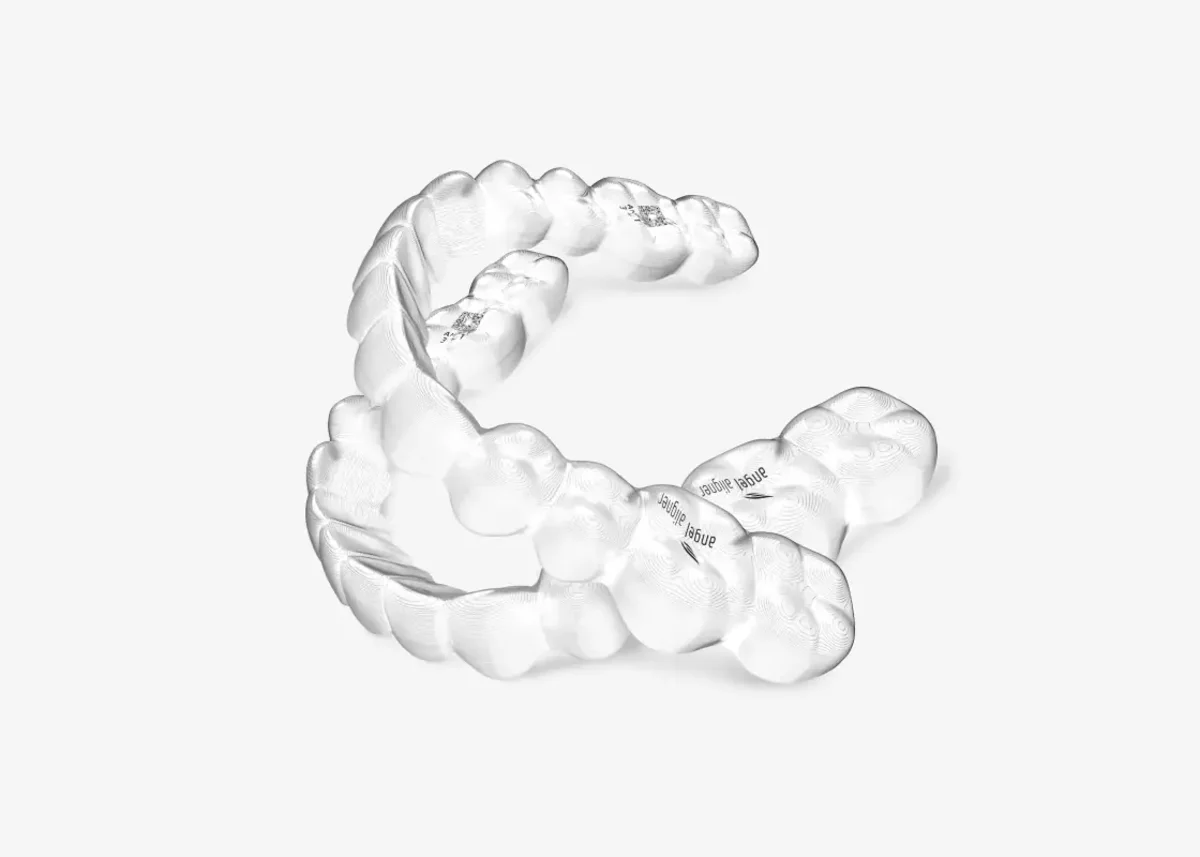
Curious about Angel Aligners but unsure what actually happens, when you need to visit, and who looks after you? This guide walks you through the BeClear Orthodontics pathway step by step, so you know exactly what to expect.
Whether you are a busy professional, a parent planning around school terms, or someone who travels often, Angel Aligners can fit smoothly into daily life. They are discreet, comfortable, and supported by remote check-ins, so you spend less time in the chair and more time getting on with your day.
Here is how we take you from first scan to confident new smile, with our specialist team beside you.
Your journey starts with a free specialist consultation at BeClear Orthodontics in Cheadle Hulme. You will meet our coordinator Karen, who makes the process simple from the moment you arrive. We take a digital scan of your teeth, then show a 3D simulation so you can preview a projected outcome before deciding to go ahead.
One of our Specialist Orthodontists, Dr Laura, Dr Dima, or Dr Vicki, will talk through your goals, assess your bite, and explain whether Angel Aligners are right for you or your child. You will get a clear, no-pressure explanation of options, timelines, and what is included. If you prefer, you can ask questions by phone or WhatsApp before or after your visit.
If you are comparing choices, you can also learn more about our aligner and braces options on the website, including useful pages on Invisalign® and braces for adults.
Angel Aligners move teeth in small, planned steps. To make movements precise, your specialist may add:
These are only used when clinically helpful. Your plan is designed by your specialist and delivered with hands-on support from our orthodontic therapists Paige and Lucy, who are brilliant at guiding you through each step.
Once you are happy with the plan, your custom Angel Aligners are manufactured. At your first fit, we check the aligner sits snugly, place any planned attachments, and teach you how to wear and care for your trays. Most patients change to a new set every one to two weeks, as advised.
Comfort and discretion are key. The trays are smooth, nearly invisible in photos and meetings, and easy to remove for meals. This makes them ideal for school, work, sport, and travel.
To keep visits efficient, we pair your treatment with Dental Monitoring, a smartphone-based system that lets your specialist review progress from wherever you are. You submit quick scans using your phone camera, and we track aligner fit, tooth movement, and hygiene.
Scan cadence is tailored to your case. Many patients scan weekly or every 10 to 14 days. In some phases, we may ask for scans every 5 to 7 days to keep momentum, particularly around refinements or when we are making active changes. If a scan flags something we want to see in person, we will invite you in promptly.
How many in-practice visits will you need? With Dental Monitoring, many aligner patients attend around 4 to 6 visits across a typical course, though this varies with complexity. The combination of remote oversight and selective in-person checks helps treatment fit around exams, busy work seasons, and trips abroad.
Most aligner journeys include a refinement stage. After an initial series, we rescan and review your smile against the goals. If a tooth needs a touch more rotation or a gap needs tidying, we plan further aligners. Refinements are normal and are part of aiming for a neat, balanced finish. Attachments can be adjusted at this stage; elastics may be added or removed depending on bite progress.
Throughout, you continue remote check-ins, and our team is on hand via WhatsApp for quick advice if something feels loose, tight, or you lose a tray while travelling.
When we are all happy with the result, we remove attachments and move to retention. You will receive custom removable retainers, and in many cases we also recommend a slim fixed retainer bonded behind the front teeth. Your specialist will guide you on full-time wear for the first few months, then long-term night-time wear to keep everything stable.
For suitable adults, professional teeth whitening can be arranged once teeth have settled. Many patients choose this as a final boost to finish their new smile.
Behind the scenes, our wider team supports scheduling, remote monitoring, and day-to-day questions so you always know who to ask.
If you are weighing up aligners against other options, you can explore our braces pages for adults and compare what suits your lifestyle best.
Ready to see your 3D smile preview and a plan built around your schedule? Book a free consultation online, or message us on WhatsApp for quick queries and reassurance before you visit.
Angel Aligners at BeClear combine a specialist-led plan with digital scanning, discreet trays, remote Dental Monitoring, sensible refinements, and reliable retention. The result is a confident smile and a smooth experience that fits school, work, and travel.
Dr Dima is a globally recognised Specialist Orthodontist and the #1 provider of Invisalign® treatment in Greater Manchester.
She works alongside a talented team who share her passion for putting stunning smiles on our patients' faces.
With 0% interest financing options, receive a fully bespoke treatment at an affordable price point.

I had an amazing experience with Laura and Paige at BeClear! I knew my case wasn’t the most complex, but my teeth were always something that secretly bothered me. Everything was explained well, there was never any pressure or pushy sell, you could tell straight away that they were the right fit for me! 14 weeks on and I can see such a difference; not only that, I FEEL happier! Thanks guys!
Read More Read Less
This time last year I was searching around looking at Google reviews for an Orthodontist, and luckily I found BeClear. I can’t fault the service, from start to finish the girls have been fantastic and really can’t do enough for you. The results from the Invisalign® treatment have been better than I could have imagined so I cannot recommend BeClear enough.
Read More Read Less
I received a 5 star service from BeClear Orthodontics, both Dr Duncan and Paige were very professional and really helpful throughout the process. They were also very knowledgeable in giving me all the information I needed to help me make a decision on getting Invisalign® or traditional braces.
Read More Read Less
I’m currently mid-way through my treatment plan and I can’t believe how easy everything has been so far. I’d avoided getting my teeth straightened for so long as I thought I’d need to keep going back to get my teeth assessed and adjusted, but doing everything remotely after the initial consultation & adjustment fitting was so handy and convenient!
Read More Read Less
I finished my treatment with BeClear 6 months ago, I couldn’t be more happy than I am right now with my new smile. I can say BeClear has been my best decision – Dr Duncan and her staff have been amazing. I don’t have enough words to describe how great, caring and professional they have been. If anyone wants to improve their smile, check out BeClear and you will see after the first 10 minutes, you are in the right place with the best people.
Read More Read Less
I cannot recommend BeClear Orthodontics enough! The whole team has been brilliant throughout. Dr Duncan really cares about getting you your perfect smile and makes sure you are happy with the results. She has changed my smile in a way I didn’t think was possible with Invisalign®! Thanks so much!
Read More Read Less
I cannot recommend Dr Laura and the team at BeClear enough! I’d been looking at quite a few different orthodontists over the last 2-3 years before I finally found BeClear and knew instantly it was the right fit for several reasons. The whole process from start to finish was really clear and friendly. There was none of the pressure I’d had with other orthodontists in pushing you to sign up, which spoke volumes about their overall approach in going above and beyond to make their clients feel comfortable.
Read More Read Less
I honestly cannot fault BeClear Orthodontics and their service. The team are so welcoming from the get go and so easy to contact throughout the process if you have any questions. The remote element is fantastic. I would (and have!) recommended BeClear to everyone I know. 5 stars all round – thank you BeClear team!
Read More Read Less
I went to visit Laura and the team last February believing there was nothing that could be done with my teeth. I had hated them for as long as I remember, but resigned myself to the fact that they would always look awful. I’m not a fan of dentists full stop, but when you step inside the clinic you are met with such friendly staff that you cannot help but feel at ease. Every single person I spoke with, on the phone, over WhatsApp or on the dental app, were so friendly and helpful.
Read More Read Less
I’ve always wanted to have my teeth straightened as it was something I was hugely self conscious of. Aware that it is a financial investment to be taken seriously, I was keen to find the right practice for the job. Dr Duncan and her team are those people! Hugely supportive, positive and always there to answer any question; the whole process has been wonderful and the result, a perfect set of pearly whites!
Read More Read Less
Absolutely amazing practice! Hands down the best girls and treatment for myself with my Invisalign® and for my daughter with her fixed braces. We love coming to see you! Thank you for making the daunting experience of getting braces a pretty cool and exciting thing to be going through. Legends, all of you!
Read More Read Less
I visited BeClear Orthodontics today to find out how they could help me improve my teeth with Invisalign®. The practice is new, and all the equipment and technology is the very latest and state of the art. Laura and Paige were welcoming and made me feel comfortable and at ease. Even though the practice is new, Laura is very knowledgeable and experienced. I cannot wait to start my treatment and know I will be in very capable hands!
Read More Read Less
Dr Duncan, Paige and the whole team were excellent throughout my Invisalign® experience. I can’t recommend BeClear enough! They made the whole process really easy and were always available to deal with any questions/queries I had. I’ll miss checking in with them. Thanks a lot guys!
Read More Read Less