


Affordable carethat doesn’t cut corners
With 0% interest financing options, receive a fully bespoke treatment at an affordable price point.
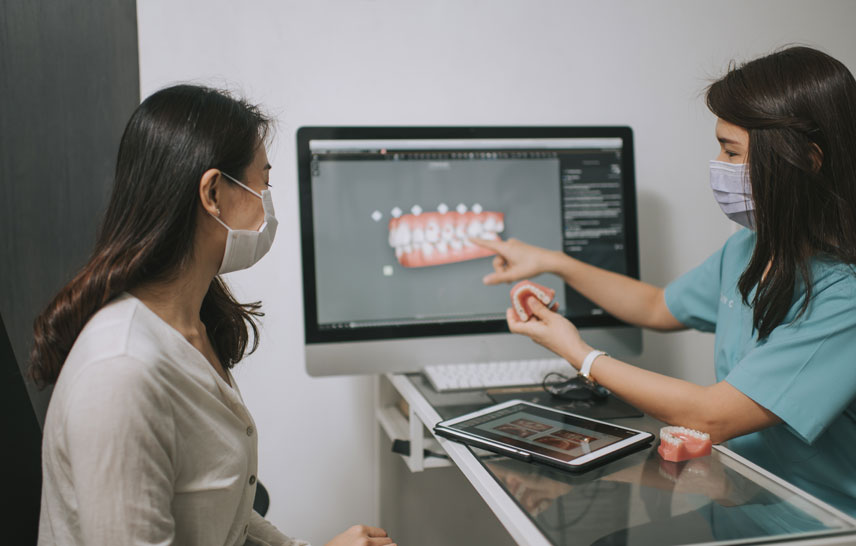
You have invested months, sometimes years, perfecting your smile. So will your teeth stay put after treatment?
Teeth are living, dynamic structures held in bone and soft tissue. Without gentle, ongoing guidance after active treatment, they often try to drift. The good news is that a simple, well-planned retention routine keeps your new smile stable and healthy for the long term.
This guide explains why movement can happen, how retainers work, how long to wear them, and practical tips to make retention easy in everyday life.
Yes, they can. After braces or clear aligners such as Invisalign®, Spark or Angel Aligners, the fibres around your teeth and the bone that remodelled during treatment need time to stabilise.
During this period, teeth are more likely to move back toward their original positions. Everyday factors like chewing, tongue posture, clenching and even natural ageing can also influence movement.
Relapse is usually gradual. You may notice small rotations, gaps reopening or mild crowding returning. Consistent retainer wear significantly reduces this risk.
Retention is the final stage of orthodontic treatment, designed to hold teeth in place while your body adapts.
Biology needs time: Bone and ligaments take months to stabilise.
Bites settle naturally: as you chew and function daily.
Life continues: and habits or ageing can influence tooth position.
Retention is not optional - it is essential for maintaining your result.
Most patients follow a two-stage plan:
Initial phase: full-time wear for around 3 to 6 months after treatment, removing only for eating and cleaning.
Long-term phase: night-time wear, often a few nights per week indefinitely.
Teeth can shift over time, so ongoing night wear is the simplest way to maintain alignment. If your retainer feels tight, it is a sign your teeth may have started to move.
There are two main types, often used together for best results.
Removable retainers: clear, custom-made trays that fit over your teeth. They are easy to clean and convenient for night-time wear.
Fixed retainers: a thin wire bonded behind the front teeth, providing constant support without needing to remember wear time.
Your Specialist Orthodontist will recommend the best combination based on your case and lifestyle.
Keeping retainers clean and well-maintained is key.
Rinse and gently brush removable retainers with cool water.
Use recommended cleaning products regularly.
Avoid hot water, which can warp the material.
Store retainers in a ventilated case when not in use.
Clean around fixed retainers carefully using interdental brushes or floss threaders.
Retainers will need replacing over time. If they crack, warp or feel loose, arrange a review promptly.
Act quickly to prevent unwanted movement.
Use a spare retainer if available.
Contact your orthodontic clinic for advice and replacement.
If a fixed retainer becomes loose, avoid hard foods and seek repair.
Prompt action helps maintain your results without needing further treatment.
Make retention part of your routine.
Keep a spare retainer case with you.
Carry a small cleaning kit for convenience.
Set reminders to wear retainers at night.
Pack retainers in hand luggage when travelling.
Use a mouthguard for contact sports and wear retainers afterwards.
Get in touch if:
Your retainer no longer fits properly.
You notice cracks or damage.
A fixed retainer becomes loose.
Teeth appear to be shifting.
Early advice prevents more complex issues.
Yes, especially without consistent retainer use.
It keeps teeth stable while your body adapts and prevents relapse.
Full-time initially, then long-term night wear indefinitely.
Removable clear retainers, fixed retainers or a combination of both.
Clean regularly, avoid heat and store safely when not in use.
Use a spare if possible and contact your orthodontist quickly.
Your smile is an investment worth protecting. Teeth can shift without support, but a simple retention routine keeps your results stable for years to come.
If you have questions about your retainers or need a replacement, book a free consultation or contact your orthodontic team at BeClear Orthodontics for personalised advice.
Dr Dima is a globally recognised Specialist Orthodontist and the #1 provider of Invisalign® treatment in Greater Manchester.
She works alongside a talented team who share her passion for putting stunning smiles on our patients' faces.
With 0% interest financing options, receive a fully bespoke treatment at an affordable price point.
I had an amazing experience with Laura and Paige at BeClear! I knew my case wasn’t the most complex, but my teeth were always something that secretly bothered me. Everything was explained well, there was never any pressure or pushy sell, you could tell straight away that they were the right fit for me! 14 weeks on and I can see such a difference; not only that, I FEEL happier! Thanks guys!
Read More Read LessThis time last year I was searching around looking at Google reviews for an Orthodontist, and luckily I found BeClear. I can’t fault the service, from start to finish the girls have been fantastic and really can’t do enough for you. The results from the Invisalign® treatment have been better than I could have imagined so I cannot recommend BeClear enough.
Read More Read LessI received a 5 star service from BeClear Orthodontics, both Dr Duncan and Paige were very professional and really helpful throughout the process. They were also very knowledgeable in giving me all the information I needed to help me make a decision on getting Invisalign® or traditional braces.
Read More Read LessI’m currently mid-way through my treatment plan and I can’t believe how easy everything has been so far. I’d avoided getting my teeth straightened for so long as I thought I’d need to keep going back to get my teeth assessed and adjusted, but doing everything remotely after the initial consultation & adjustment fitting was so handy and convenient!
Read More Read LessI finished my treatment with BeClear 6 months ago, I couldn’t be more happy than I am right now with my new smile. I can say BeClear has been my best decision – Dr Duncan and her staff have been amazing. I don’t have enough words to describe how great, caring and professional they have been. If anyone wants to improve their smile, check out BeClear and you will see after the first 10 minutes, you are in the right place with the best people.
Read More Read LessI cannot recommend BeClear Orthodontics enough! The whole team has been brilliant throughout. Dr Duncan really cares about getting you your perfect smile and makes sure you are happy with the results. She has changed my smile in a way I didn’t think was possible with Invisalign®! Thanks so much!
Read More Read LessI cannot recommend Dr Laura and the team at BeClear enough! I’d been looking at quite a few different orthodontists over the last 2-3 years before I finally found BeClear and knew instantly it was the right fit for several reasons. The whole process from start to finish was really clear and friendly. There was none of the pressure I’d had with other orthodontists in pushing you to sign up, which spoke volumes about their overall approach in going above and beyond to make their clients feel comfortable.
Read More Read LessI honestly cannot fault BeClear Orthodontics and their service. The team are so welcoming from the get go and so easy to contact throughout the process if you have any questions. The remote element is fantastic. I would (and have!) recommended BeClear to everyone I know. 5 stars all round – thank you BeClear team!
Read More Read LessI went to visit Laura and the team last February believing there was nothing that could be done with my teeth. I had hated them for as long as I remember, but resigned myself to the fact that they would always look awful. I’m not a fan of dentists full stop, but when you step inside the clinic you are met with such friendly staff that you cannot help but feel at ease. Every single person I spoke with, on the phone, over WhatsApp or on the dental app, were so friendly and helpful.
Read More Read LessI’ve always wanted to have my teeth straightened as it was something I was hugely self conscious of. Aware that it is a financial investment to be taken seriously, I was keen to find the right practice for the job. Dr Duncan and her team are those people! Hugely supportive, positive and always there to answer any question; the whole process has been wonderful and the result, a perfect set of pearly whites!
Read More Read LessAbsolutely amazing practice! Hands down the best girls and treatment for myself with my Invisalign® and for my daughter with her fixed braces. We love coming to see you! Thank you for making the daunting experience of getting braces a pretty cool and exciting thing to be going through. Legends, all of you!
Read More Read LessI visited BeClear Orthodontics today to find out how they could help me improve my teeth with Invisalign®. The practice is new, and all the equipment and technology is the very latest and state of the art. Laura and Paige were welcoming and made me feel comfortable and at ease. Even though the practice is new, Laura is very knowledgeable and experienced. I cannot wait to start my treatment and know I will be in very capable hands!
Read More Read LessDr Duncan, Paige and the whole team were excellent throughout my Invisalign® experience. I can’t recommend BeClear enough! They made the whole process really easy and were always available to deal with any questions/queries I had. I’ll miss checking in with them. Thanks a lot guys!
Read More Read Less