


Affordable carethat doesn’t cut corners
With 0% interest financing options, receive a fully bespoke treatment at an affordable price point.
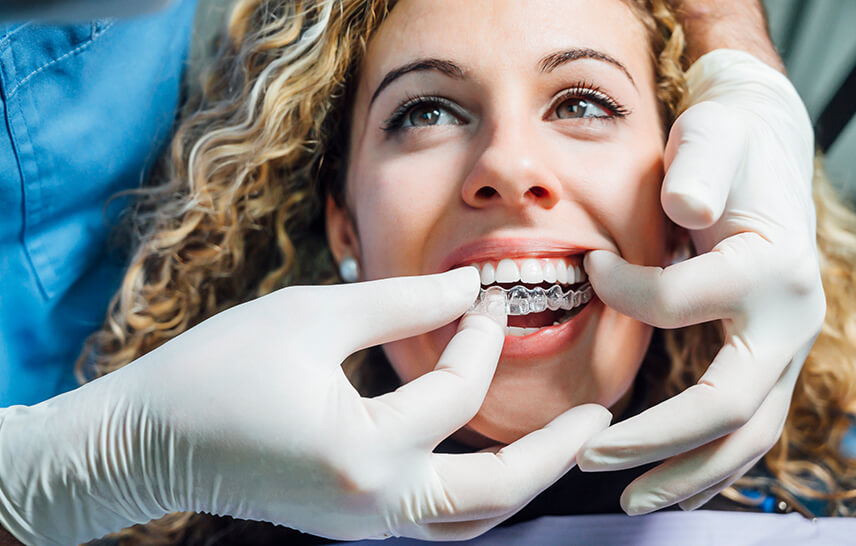
Summer plans, exams and bank holidays can make even the best intentions wobble. If you are wearing Angel Aligners, knowing exactly when to switch trays and what to do when life gets in the way keeps your treatment safe and on track.
This guide explains standard change intervals, why some patients switch sooner or later, how Dental Monitoring personalises your pace, and what to do if you lose a tray, feel tenderness, or have travel coming up.
You will also find quick decision trees and easy tips to help you stay consistent through busy weeks, long flights, and revision marathons.
Most adult patients change Angel Aligners every 7 to 10 days. That range is not arbitrary. Teeth respond at different speeds depending on your biology, the type of movement planned for that stage, and how closely you wear aligners for 20 to 22 hours per day.
Your Specialist Orthodontist sets your initial cadence after reviewing your digital scan and plan. At BeClear Orthodontics, we pair Angel Aligners with Dental Monitoring to fine-tune that schedule in real time.
Not always. Faster switches only help if each tray is fully seated and tracking well. Changing too soon can cause poor tracking, discomfort, and extra refinements later, which can lengthen treatment overall.
If in doubt, wait a day and message us. One extra day now can save weeks later.
Dental Monitoring is a smartphone-based remote check-in system. You send quick scans, and our clinicians review fit, hygiene, and elastics use. Based on what we see, we may:
Remote supervision reduces in-practice visits while maintaining specialist oversight, especially during exams, travel, or busy work periods.
Let us know your dates in advance. We can adjust your pack-out, provide spare chewies and aligners, and tailor your scan cadence.
Contact BeClear Orthodontics: Phone: 0161 488 4885 | WhatsApp: 07990 844641
Aim for 20–22 hours of daily wear and a 7–10 day change rhythm, then let Dental Monitoring feedback fine-tune your pace. Use decision trees for missed days, tenderness, gaps, or travel to protect comfort and timeline.
Considering aligners for the first time or comparing systems like Angel Aligners and Invisalign®? Explore our [Angel Aligners overview] and book a free consultation for a personalised plan.
Dr Dima is a globally recognised Specialist Orthodontist and the #1 provider of Invisalign® treatment in Greater Manchester.
She works alongside a talented team who share her passion for putting stunning smiles on our patients' faces.
With 0% interest financing options, receive a fully bespoke treatment at an affordable price point.
I had an amazing experience with Laura and Paige at BeClear! I knew my case wasn’t the most complex, but my teeth were always something that secretly bothered me. Everything was explained well, there was never any pressure or pushy sell, you could tell straight away that they were the right fit for me! 14 weeks on and I can see such a difference; not only that, I FEEL happier! Thanks guys!
Read More Read LessThis time last year I was searching around looking at Google reviews for an Orthodontist, and luckily I found BeClear. I can’t fault the service, from start to finish the girls have been fantastic and really can’t do enough for you. The results from the Invisalign® treatment have been better than I could have imagined so I cannot recommend BeClear enough.
Read More Read LessI received a 5 star service from BeClear Orthodontics, both Dr Duncan and Paige were very professional and really helpful throughout the process. They were also very knowledgeable in giving me all the information I needed to help me make a decision on getting Invisalign® or traditional braces.
Read More Read LessI’m currently mid-way through my treatment plan and I can’t believe how easy everything has been so far. I’d avoided getting my teeth straightened for so long as I thought I’d need to keep going back to get my teeth assessed and adjusted, but doing everything remotely after the initial consultation & adjustment fitting was so handy and convenient!
Read More Read LessI finished my treatment with BeClear 6 months ago, I couldn’t be more happy than I am right now with my new smile. I can say BeClear has been my best decision – Dr Duncan and her staff have been amazing. I don’t have enough words to describe how great, caring and professional they have been. If anyone wants to improve their smile, check out BeClear and you will see after the first 10 minutes, you are in the right place with the best people.
Read More Read LessI cannot recommend BeClear Orthodontics enough! The whole team has been brilliant throughout. Dr Duncan really cares about getting you your perfect smile and makes sure you are happy with the results. She has changed my smile in a way I didn’t think was possible with Invisalign®! Thanks so much!
Read More Read LessI cannot recommend Dr Laura and the team at BeClear enough! I’d been looking at quite a few different orthodontists over the last 2-3 years before I finally found BeClear and knew instantly it was the right fit for several reasons. The whole process from start to finish was really clear and friendly. There was none of the pressure I’d had with other orthodontists in pushing you to sign up, which spoke volumes about their overall approach in going above and beyond to make their clients feel comfortable.
Read More Read LessI honestly cannot fault BeClear Orthodontics and their service. The team are so welcoming from the get go and so easy to contact throughout the process if you have any questions. The remote element is fantastic. I would (and have!) recommended BeClear to everyone I know. 5 stars all round – thank you BeClear team!
Read More Read LessI went to visit Laura and the team last February believing there was nothing that could be done with my teeth. I had hated them for as long as I remember, but resigned myself to the fact that they would always look awful. I’m not a fan of dentists full stop, but when you step inside the clinic you are met with such friendly staff that you cannot help but feel at ease. Every single person I spoke with, on the phone, over WhatsApp or on the dental app, were so friendly and helpful.
Read More Read LessI’ve always wanted to have my teeth straightened as it was something I was hugely self conscious of. Aware that it is a financial investment to be taken seriously, I was keen to find the right practice for the job. Dr Duncan and her team are those people! Hugely supportive, positive and always there to answer any question; the whole process has been wonderful and the result, a perfect set of pearly whites!
Read More Read LessAbsolutely amazing practice! Hands down the best girls and treatment for myself with my Invisalign® and for my daughter with her fixed braces. We love coming to see you! Thank you for making the daunting experience of getting braces a pretty cool and exciting thing to be going through. Legends, all of you!
Read More Read LessI visited BeClear Orthodontics today to find out how they could help me improve my teeth with Invisalign®. The practice is new, and all the equipment and technology is the very latest and state of the art. Laura and Paige were welcoming and made me feel comfortable and at ease. Even though the practice is new, Laura is very knowledgeable and experienced. I cannot wait to start my treatment and know I will be in very capable hands!
Read More Read LessDr Duncan, Paige and the whole team were excellent throughout my Invisalign® experience. I can’t recommend BeClear enough! They made the whole process really easy and were always available to deal with any questions/queries I had. I’ll miss checking in with them. Thanks a lot guys!
Read More Read Less